

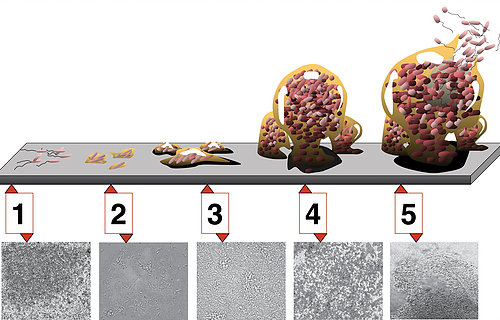
 Biofilm consists of microorganisms whose cells stick together. Under favorable conditions, these microorganisms can multiply and, as a result, form biofilm. This biofilm serves as the attachment and food source for most subsequent fouling and growth, such as algae, barnacles, or shells.
Water contains microorganisms such as bacteria, algae, fungi, viruses, and higher organisms. Bacteria typically measure about 1 millimeter. Microorganisms can be considered a colloidal solution and can be removed during pretreatment. However, the difference between microorganisms and inanimate particles is the ability of microorganisms to multiply. This enables them to form a “slimy layer,” called a biofilm, under certain favorable conditions.
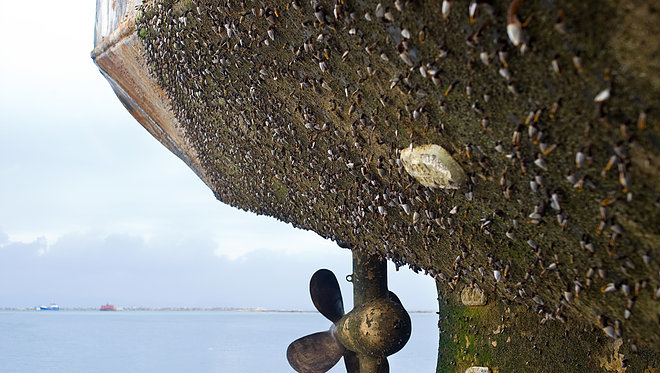 Biofilm-induced fouling causes many problems, such as corrosion, the growth of microorganisms, and reduced heat transfer, as well as a reduction in cross-sectional area and blockages. Furthermore, fouling on ship hulls can result in significant fuel consumption due to increased drag on the hull in the water. These costs will begin immediately and can reach up to 30%!
All of these issues result in the need for chemicals or other environmentally harmful procedures. In addition to their environmental impact, all of these problems lead to higher maintenance costs and will result in higher operating costs and higher total costs of ownership in the shipping industry.
Biofilm is difficult to remove because it protects microorganisms from shear forces and biocidal chemicals. If removed portions are not completely eliminated, these residues will regrow very quickly. That is why preventing biofilm contamination is the primary objective of the pretreatment process. Controlling microbiological activity is also part of the system design and system operation.
Important Considerations


