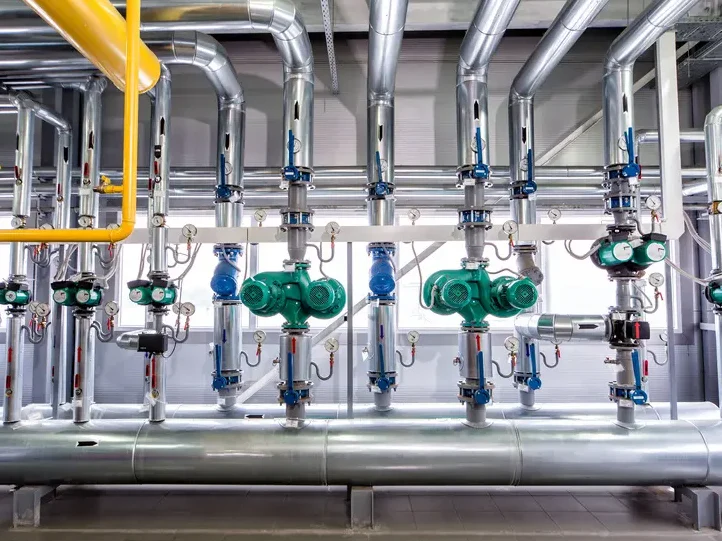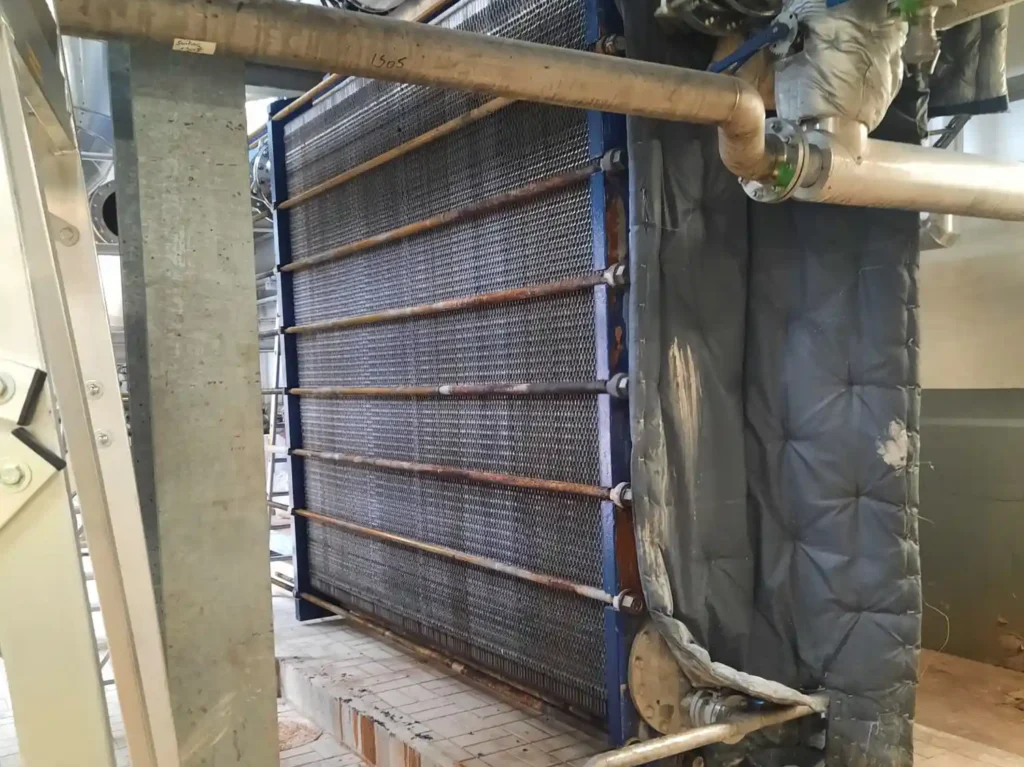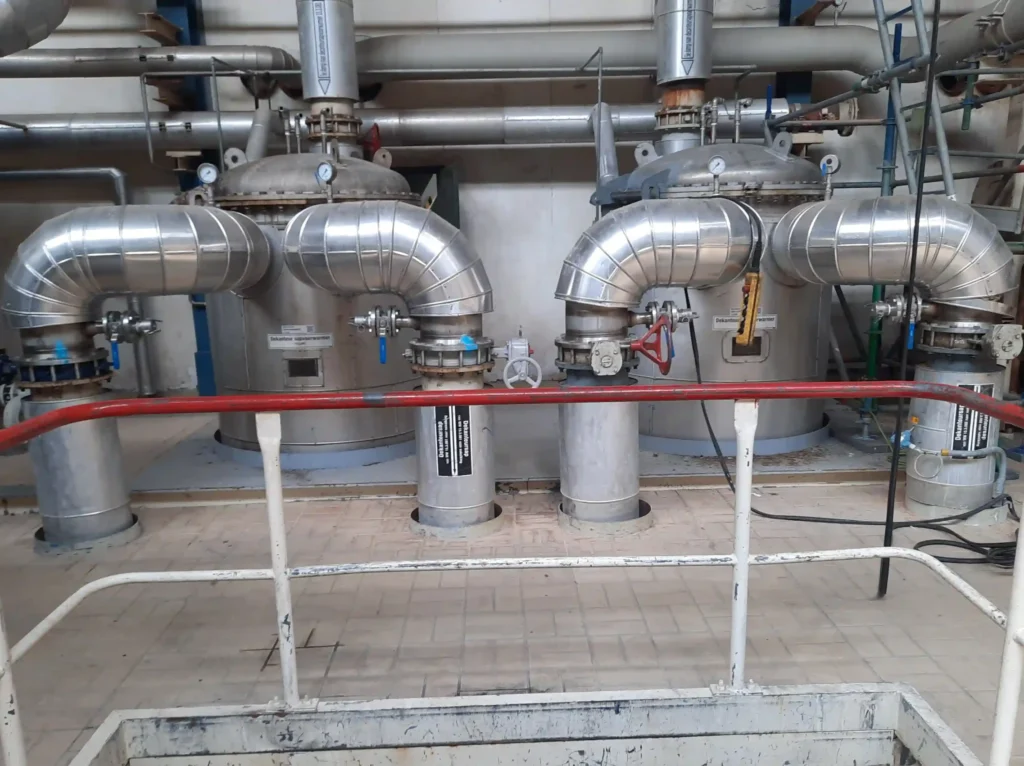
Within a short period of time, lime, biofilm, and other deposits build up in pipes, heat exchangers, and process water systems.
This contamination restricts flow and acts as an insulating layer, causing systems to operate with decreasing efficiency. The consequences are immediately noticeable in your operations:
To restore performance, periodic cleaning is often necessary, such as chemical treatments or CIP processes. This entails additional costs, causes downtime, and increases the environmental impact.
SmartFlow is a sustainable solution that prevents contamination at the source. Using ultrasonic technology, it keeps systems clean and ensures consistent performance without the use of chemicals or extensive maintenance.

Would you like to ask technical questions, discuss a custom project, or place an order? Our antifouling specialists are here to help.
You can easily reach us by phone, email, or through our contact form. We’re happy to assist you with any questions or issues you may have.
The SmartFlow ultrasonic antifouling system is a preventive system consisting of a control unit and one or more transducers. The transducers are placed on a structure by means of a 2-component industrial epoxy adhesive. They produce ultrasonic signals that travel through the structure to be protected. This high-frequency signal makes it more difficult for unicellular bacteria to adhere and thus prevents further fouling of the ship. In fact, these single-celled bacteria make up the biofilm that multicellular organisms need to settle on a surface.
In connection with correct installation and warranty, it is advisable to have the system installed by Lamers System Care or an authorized dealer of the SmartFlow system. In particular, determining the positions of the transducers and placing the transducers require professional attention and experience.
The system consumes an average of 5 watts per transducer. It can be connected to 110-240 VAC, 50/60Hz.
Ultrasonic is not perceptible to human hearing. What can be heard is the gentle “clicking” of the Ultrasonic transducer, however, this is negligible.
The system prevents both biological growth and inorganic deposits, such as scaling. The ultrasonic vibrations prevent particles from adhering and depositing, keeping pipes and components free of buildup.
The system is applicable to different materials such as steel, aluminum and plastic (polyester). It is important that it be a rigid material that can transport sound and does not absorb it.
The ultrasonic antifouling system is included on the RVO’s Environmental List (MIA/VAMIL). As a result, an investment in this system may qualify for a tax investment deduction. Whether and to what extent this applies may vary from year to year; LSC would be happy to provide information on the current options.
SmartFlow stands out in several ways. The system is monitored remotely 24/7 via the SmartFlow Portal: performance is recorded in real time, anomalies are immediately flagged, and settings—such as frequency patterns—are remotely adjusted and optimized as needed. In addition, SmartFlow uses dynamic frequencies tailored to the specific application that continuously disrupt the buildup of fouling; its effectiveness is substantiated and guaranteed in advance through SPL modeling and measurements. The system is also modular and scalable, configurable from 1 to 12 transducers, ensuring that both small applications and complex installations always receive the appropriate coverage. Finally, SmartFlow is developed and assembled entirely in-house in the Netherlands, ensuring consistent quality, direct communication, fast service, and a service life of 10+ years.
In many cases, the transducers can be mounted on the outside of pipes, cooling systems, and other components without interrupting the process. LSC evaluates the most practical installation method on a case-by-case basis.
The ultrasonic system is a preventive system that prevents fouling when used on a clean surface. The surface does not need to be clean for the system to be installed. However, to ensure the system works properly and to achieve the best results, it is important to start with a clean surface. The system cannot remove existing fouling; it can only slow down the process.